Flower Drawing Watercolor: A Practical Resource for Design and Print Projects
When you work with visual content day in and day out, you quickly learn that not all digital assets are created equal. Some require heavy editing before they become usable. Others come with licensing restrictions that limit where and how you can deploy them. And many simply lack the detail and finish needed to stand up in professional contexts. This is why a resource like Flower Drawing Watercolor deserves a closer look. It is a single-file collection that combines painted floral elements with high-resolution PNG clip art, designed for anyone who needs ready-to-use botanical graphics without sacrificing quality or flexibility.
This article evaluates what this pack offers, how it performs across different use cases, and whether it fits the workflow of creators, marketers, educators, and small business owners. We will examine the file structure, the practical strengths of the illustrations, and the limitations you should consider before adding it to your library.
What Flower Drawing Watercolor Offers
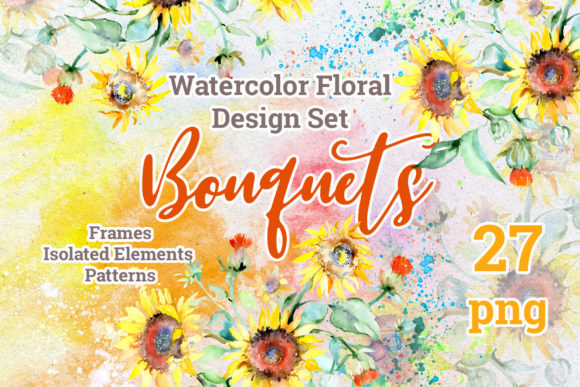
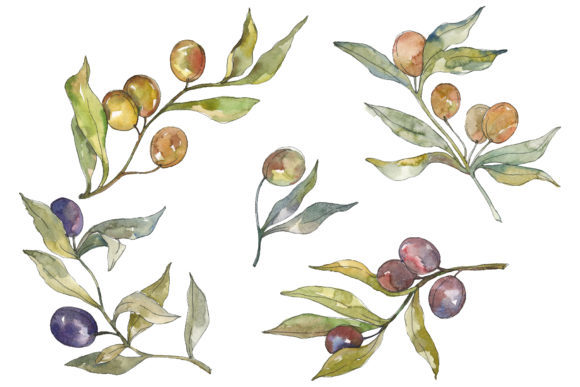
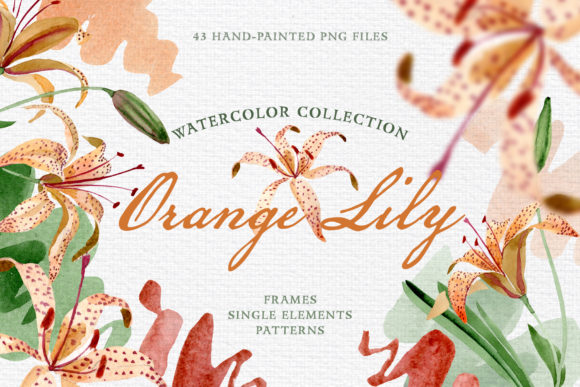
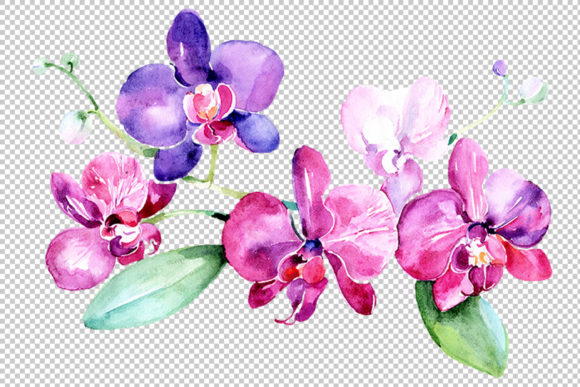
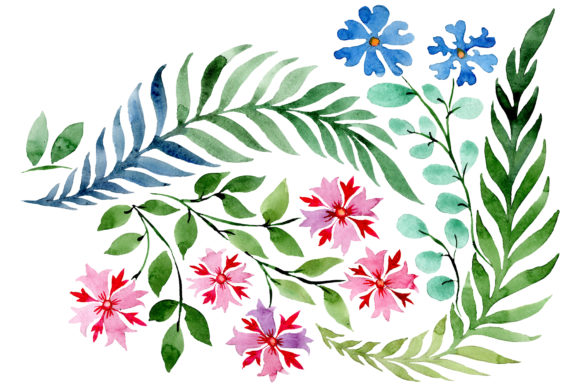
At its core, Flower Drawing Watercolor provides a set of hand-painted aquarelle elements that have been digitized at a high resolution. The pack includes frames, borders, patterns, and isolated floral motifs, all built around a cohesive watercolor aesthetic. Each element is painted by hand, scanned, and then prepared as a separate PNG file with a transparent background. The resolution is set at 300 dpi, which means the images retain sharpness and detail when printed or displayed on high-resolution screens.
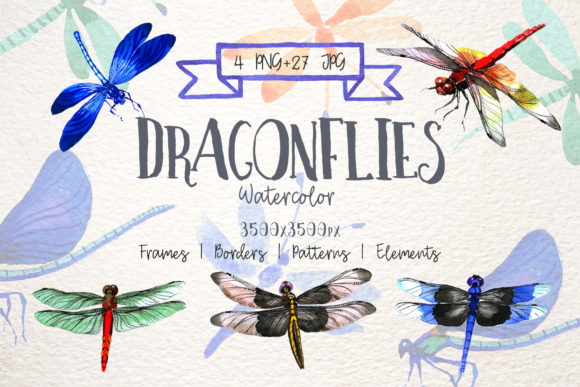
In addition to the PNG files, the pack includes patterns and frames in JPG format, sized at 3500 x 3500 pixels. This larger format is useful for background textures, wallpaper-style applications, or projects where you need a full-surface design without tiling.
The key characteristics worth noting here are the absence of a background in the PNG files, the hand-painted origin of each element, and the fact that every image is saved as an independent file. This structure gives you direct control over placement, layering, and color editing without having to extract elements from a cluttered composition.
Practical Strengths of the File Design
The decision to deliver each illustration as a separate PNG file has real practical value. When you are assembling a wedding invitation, a greeting card, or a social media graphic, you typically need to place individual elements on your canvas and adjust their size, rotation, and position independently. A single composite file with everything locked together would force you to spend extra time cutting out pieces or masking unwanted areas. With this pack, each element is already isolated, so you can drag it directly into your design software and start working immediately.
The transparent background is another practical advantage. It eliminates the need for manual background removal, which is often the most tedious part of working with stock imagery. Whether you are layering flowers over a colored background, placing them inside a frame, or combining them with text, the PNG format ensures clean edges and seamless integration.
The 300 dpi resolution also matters more than many casual users realize. While 72 dpi images might look acceptable on screen, they often appear pixelated or soft when printed. At 300 dpi, these elements are print-ready for most standard applications, from home printers to commercial presses. This makes the pack equally suited for digital use and physical production.
Real-World Use Cases: Where This Pack Excels
Flower Drawing Watercolor is not a one-size-fits-all collection, but it does cover a wide range of common project types. Let us look at a few scenarios where it performs particularly well.
Wedding Invitations and Stationery
Wedding invitation design often requires a delicate, romantic aesthetic that feels personal and handcrafted. Watercolor floral elements fit this brief naturally. You can use the isolated flowers as corner accents, build a custom border from multiple elements, or place a single bloom behind the couple’s names. The transparency allows you to overlay these elements on any paper texture or color scheme without hard edges. If you are a freelance designer or a stationery shop owner, having a pack like this reduces the time spent sourcing and preparing artwork for each new order.
Greeting Cards and Personalized Notes
Greeting cards benefit from the same versatility. Whether you are designing for birthdays, anniversaries, sympathy notes, or seasonal greetings, the watercolor style conveys warmth and sincerity. The patterns included in the JPG files can be used as full-bleed backgrounds, while the isolated elements can be clustered around text or placed inside a frame. Because the files are editable in size and color, you can adapt them to different card dimensions without losing quality.
Blog Graphics, Quotes, and Social Media
Bloggers and content creators often need visuals that feel distinctive without requiring hours of illustration work. A watercolor floral element placed behind a quote or used as a header background adds visual interest without overwhelming the text. The transparent PNG format makes it easy to insert these elements into blog templates, social media posts, or pin graphics. The high resolution also ensures they look crisp on retina displays and mobile screens.
Posters and Printed Decor
For printed posters or art prints, the large JPG patterns and frames are especially useful. At 3500 x 3500 pixels, you have enough resolution to produce prints up to about 11 x 11 inches at 300 dpi, or larger if you accept a slightly lower print resolution. The hand-painted texture of the watercolor elements gives printed pieces a tactile, organic feel that flat vector graphics often lack.
Quality and Usability Assessment
When evaluating any digital asset pack, consistency and reliability matter as much as the visual style. In this collection, the hand-painted origin of the elements is both a strength and a point to check carefully. Hand-painted watercolor naturally produces variations in opacity, edge softness, and pigment density. These variations give the artwork its authentic, organic character, but they also mean that not every element will look identical in saturation or brightness. If you are creating a layout that requires perfect uniformity across multiple flowers, you may need to adjust levels or tint some elements to match.
The PNG files are delivered without background, which is excellent for compositing, but you should verify that the edges of each element are clean and free from scanning artifacts. In well-prepared watercolor scans, the edges are typically soft but defined, allowing the element to blend naturally into whatever background you place it on. Based on the file specifications, this pack appears to follow that standard.
The JPG patterns and frames are a different format and do include a background layer. This is worth noting because you cannot drop them into a design with a transparent background. However, they are large enough that you can crop, mask, or layer them as needed. The JPG format also means the patterns are ready to use immediately as backgrounds without any additional processing.
Flexibility and Edibility
The pack description emphasizes that elements are fully editable in size, colors, and other properties. This is accurate in the sense that PNG and JPG files can be scaled down without issues and recolored using adjustment layers in software like Photoshop, GIMP, Affinity, or Canva. However, keep in mind that scaling up a raster image beyond its original dimensions will introduce pixelation. The provided resolution is generous for most applications, but if you plan to use an isolated flower as a large poster element, test the upscaling before committing to a design.
Color editing is straightforward when working with watercolor textures because the pigments are not perfectly flat. You can apply hue or color balance adjustments to shift the overall tone, but the natural variation within each element will remain. This is usually desirable, but if you need a flat, uniform color, you may need to combine the watercolor element with a solid overlay.
Who Benefits Most from This Pack
Flower Drawing Watercolor is best suited for individuals and teams who regularly produce visual content that requires a handcrafted, natural aesthetic. This includes:
- Freelance graphic designers who work on wedding stationery, branding, or custom invitations and need a reliable library of botanical elements.
- Small business owners who run stationery shops, print-on-demand stores, or handmade product lines and want to differentiate their offerings with original-looking artwork.
- Event planners who design their own save-the-dates, programs, signage, or thank-you cards.
- Content creators and bloggers in lifestyle, wedding, home decor, or gardening niches who need consistent visual branding across posts and printable resources.
- Educators and workshop leaders who create handouts, worksheets, or digital presentations and want them to look polished without spending excessive time on illustration.
- Marketers producing social media graphics, email headers, or promotional materials that benefit from a soft, approachable visual style.
The pack is less ideal for projects that require exact vector scalability, such as logos or signage that must be printed at billboard size. Raster watercolor elements, no matter how high the starting resolution, have a finite limit. In those cases, a vector-based floral set would be more appropriate.
Practical Recommendations for Getting the Most Out of the Pack
To maximize the value of Flower Drawing Watercolor, consider a few workflow approaches. First, organize the PNG files by type, grouping isolated flowers, borders, and frames into separate folders. This saves time when you are searching for a specific element under deadline pressure.
Second, experiment with layering multiple elements to create custom compositions. Because each file is independent, you can overlap flowers, change their scale, and rotate them freely to build unique arrangements. This is especially useful for wedding invitations where each client wants a slightly different layout.
Third, test the elements on your most common background colors early in the process. Watercolor textures can look strikingly different on white, cream, dark, or textured paper. Previewing these combinations before finalizing a design helps you avoid surprises in print.
Finally, keep a master file where you save adjusted versions of elements with color shifts or contrast adjustments you frequently use. This reduces repetitive work on future projects.
Considerations and Limitations
No resource is perfect for every situation, and this pack has a few limitations worth noting. The single-file nature of the collection means you are getting one aesthetic style, which may not suit every brand or project. If your work requires a mix of photographic, vector, and hand-drawn styles, you will still need other sources to fill those gaps.
The hand-painted origin also means there is natural variation in the thickness, opacity, and pigment distribution of each element. If you need perfectly identical repeats across a large design, you may find that some elements do not match exactly. This is not a flaw; it is a characteristic of the medium. But it is something to account for in your workflow.
Additionally, while the JPG patterns and frames are large, they are not tileable out of the box for seamless patterns. If you want to use them as repeating backgrounds, you will need to do some manual editing to ensure seamless joins.
Final Assessment: Is Flower Drawing Watercolor Right for Your Projects?
This pack occupies a useful middle ground between generic stock photography and custom commissioned artwork. It gives you hand-painted watercolor elements that are ready to use, with enough resolution and format flexibility to work across print and digital media. The transparent PNG files, independent element structure, and 300 dpi resolution are practical features that save time and reduce friction in real-world design work.
If your projects frequently involve floral accents, delicate borders, or handcrafted visual themes, this pack will likely become a frequently used asset in your library. It is particularly strong for wedding stationery, greeting cards, blog graphics, and small-format prints. For large-scale signage or projects requiring uniform vector elements, you would need to supplement it with other resources.
Ultimately, Flower Drawing Watercolor delivers on its core promise: providing detailed, hand-painted botanical illustrations that you can use immediately in your designs, with minimal editing and maximum creative freedom.