Orange Lily Watercolor: Hand-Painted Aquarelle Design Elements for Creative Projects
The Artistic Value of Hand-Painted Aquarelle Florals
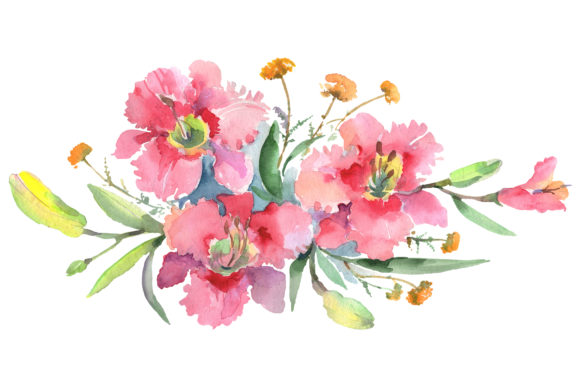
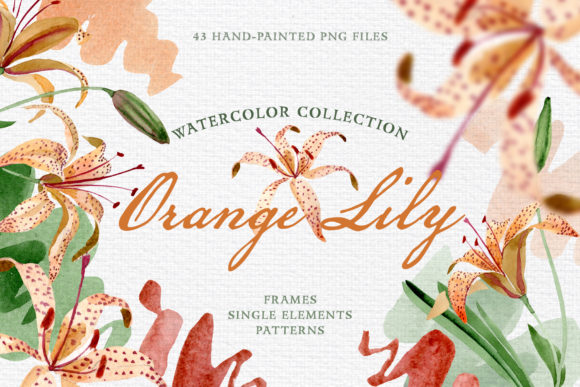
Watercolor illustration occupies a unique space in digital design. Unlike vector-based graphics or photography, hand-painted aquarelle carries the texture of brushstroke, the unpredictable bloom of pigment on paper, and the quiet variation that only human hands can produce. The Orange Lily Watercolor collection captures this essence with deliberate precision: each petal, each leaf, each gradient of orange and amber has been painted by hand before being digitized at high resolution. For designers, this means access to authentic watercolor texture without the need to source materials, scan artwork, or clean up imperfect scans. The collection includes 43 individual files, each one a separate illustration that can be used independently or layered into larger compositions. Whether you are a professional graphic designer building a wedding suite or a hobbyist creating custom greeting cards, the hand-painted quality of these lilies brings warmth, depth, and organic beauty to any project.
What distinguishes hand-painted aquarelle from digital brush simulations is the microtexture. Real watercolor leaves behind subtle granulation, lighter edges where water pooled, and unpredictable color shifts that machines cannot easily replicate. The Orange lily Watercolor png clipart of 43 files preserves these characteristics faithfully. Each file was scanned at 300 dpi, ensuring that the finest details of the brushwork are retained. When you enlarge a petal for a poster or reduce it for an invitation detail, the organic texture remains intact. This is particularly valuable for projects that require a tactile, handmade aesthetic without the logistical overhead of physically producing artwork for every iteration.
Understanding the Complete Asset Library: 43 Files of Versatile Design
The structure of this collection has been designed with practical workflow in mind. Rather than offering a single composite image or a limited set of variations, the Orange Lily Watercolor pack provides a comprehensive toolkit that covers multiple design needs. The 43 files are organized into logical categories that allow you to grab exactly what you need for any given project. Understanding what each category contains will help you plan your designs more efficiently.
- Isolated illustrations: Individual lily blooms, leaves, buds, and stems on transparent backgrounds. These are the building blocks for custom compositions. You can arrange them freely, resize them, rotate them, and layer them without worrying about background interference.
- Frames: Pre-composed border designs that range from delicate circular wreaths to full rectangular frames. These are ideal for wedding invitations, certificates, or quote cards where you want a cohesive edge treatment without building it from scratch.
- Borders: Linear arrangements that work well for page edges, envelope liners, or dividing sections in a layout. They can be stretched, repeated, or cropped to fit different dimensions.
- Patterns: Seamless or repeatable tile designs that can fill backgrounds, fabric mockups, or digital wallpapers. The orange lily motif repeats without awkward seams, making it suitable for large-area coverage.
Each file has been named descriptively, so you can locate specific elements quickly. This organization is especially useful for time-sensitive projects such as event materials or client deliverables where browsing through dozens of unnamed files would slow down your workflow. The combination of isolated elements and pre-assembled compositions means you can work both from scratch and from ready-made templates, depending on your project stage.
Technical Specifications That Matter for Professional Projects
When selecting digital assets for professional use, technical quality directly impacts output results. The Orange Lily Watercolor pack meets industry standards across several key parameters. The isolated illustrations are provided as PNG files with transparent backgrounds. This is critical for compositing because it allows you to place the lily elements over any background color, texture, or photograph without clipping or white halos. The transparency is true alpha channel, not a crude cutout, so the soft edges of the watercolor washes are preserved. At 300 dpi, the images are suitable for both screen display and print. Whether you are producing a digital invitation for social media or a printed poster at 12 by 18 inches, the resolution holds up without pixelation.
The frames and patterns, conversely, are provided as JPG files at 3500x3500 pixels. JPG is the appropriate format for these assets because they are intended to be used as backgrounds or full-page textures where transparency is not required. The high pixel dimension ensures that even large-format prints remain sharp. The patterns tile cleanly, which is essential for wallpaper, fabric design, or digital backgrounds where repetition is visible. For users who need to adjust colors, resize elements, or combine multiple illustrations, the PNG format of the isolated files allows full editability in software like Photoshop, Procreate, Canva, or Affinity Designer. You can change hue, saturation, opacity, and blending modes without degrading the original image quality.
Practical Applications Across Creative Disciplines
The versatility of this collection means it serves a wide range of creative fields. Below are real-world applications organized by user type, demonstrating how the same assets can be adapted to very different outputs.
- Wedding and event designers: The orange lily frames and borders are particularly well-suited for autumn weddings, botanical themes, and bohemian celebrations. Use the isolated blooms to create custom monograms, place cards, or table numbers. The seamless patterns can be printed on chiffon or linen for table runners or used as digital backgrounds for wedding websites.
- Greeting card creators: Combine a single orange lily illustration with a frame for an instant card front. Because the elements are separate files, you can vary the composition for each card in a series without repeating the exact same layout. The hand-painted quality gives cards a premium, artisan feel that stands out on retail shelves.
- Quote and blog graphic designers: Place typography over the painted pattern backgrounds for social media quotes, blog headers, or Pinterest pins. The orange tones complement neutral palettes and natural textures, making the text readable while the watercolor adds visual interest. The 3500x3500 pixel patterns can be cropped to various aspect ratios without losing resolution.
- Poster and print artists: The high resolution and detailed brushwork allow for large-scale printing. A single isolated lily can become a focal point in a minimalist poster, or the full floral frame can encircle event information. The transparency of the PNG files makes compositing multiple elements efficient.
- DIY crafters and small business owners: Use the files for product labeling, packaging inserts, or shop signage. The hand-painted aesthetic communicates care and craftsmanship, which is valuable for artisanal brands selling soaps, candles, teas, or handmade stationery.
Working with Frames, Borders, Patterns, and Isolated Elements
Understanding how to combine these asset types effectively can expand your creative range. The frames in this collection are not simple rectangular outlines; they are floral compositions that wrap around a central space. When you use a frame, the interior area remains transparent or white (depending on the file type), allowing you to insert text, photos, or additional illustrations. The borders are more linear and work well as dividers between sections of a document or as edge accents on envelope flaps. Since both frames and borders are JPGs at 3500x3500 pixels, you have ample resolution to crop them to narrower dimensions if needed.
The isolated illustrations offer the greatest flexibility. Because each flower, leaf, and bud is a separate PNG file, you can build your own custom frames by arranging them around a central image. You might create a circular wreath by rotating multiple lily blooms around a center point, or build a cascading bouquet for the corner of a poster. The hand-painted style ensures that even when you scale or rotate these elements, the organic brush texture remains consistent. For users who want to maintain a cohesive color palette, the orange lily tones range from deep burnt orange to soft peach, providing natural variation within a unified scheme.
Patterns serve a different purpose: they are best used as backgrounds or textures rather than focal points. Because they tile seamlessly, you can fill large areas without visible seams. Consider using a pattern as a subtle backdrop for a website hero section, as a wrapping paper design, or as a digital wallpaper for event slideshows. The pattern files are large enough that you can also crop a section of the pattern to use as a unique textured background for a specific project.
Customization and Editing Possibilities for Unique Outcomes
One of the strongest advantages of this collection is the editability of the files. Because the isolated elements are PNGs with full alpha transparency, they can be recolored, layered, and transformed without degrading the original artwork. For example, you can change the orange hue to a coral, rust, or gold using adjustment layers in Photoshop or Hue/Saturation tools in Canva. You can also apply blending modes to create overlay effects, such as placing a lily over a dark background with the Screen mode to produce a luminous, watercolor-washed look. The frames and borders, being JPGs, are less flexible for recoloring unless you use selection tools, but they provide a ready-made solution for projects that match the original palette.
Size editing is equally straightforward. The 300 dpi resolution of the PNG files means you can reduce them significantly for web graphics without quality loss, or enlarge them moderately for print. If you need a very large banner, you can upscale the images using AI-based enlargement tools while retaining the organic texture. The absence of a background in the isolated files simplifies compositing: you can drop a lily onto any background color, gradient, or photograph and it will blend naturally. For users who want to create a fully custom pattern, you can duplicate and tile the isolated elements yourself, arranging them at different angles and scales for a unique result.
Real-World Use Cases and Implementation Ideas
To illustrate the practical range of this collection, here are specific implementation scenarios that go beyond generic suggestions. Each scenario assumes you have access to basic image editing software and the 43 files from the pack.
- Autumn wedding invitation suite: Use a rectangular frame from the JPG files as the outer border of the invitation card. Place the event details inside the frame using a serif font in dark brown. On the reply card, use a single isolated orange lily in the upper left corner. For the envelope liner, tile a pattern file at reduced opacity so the text address remains legible. The continuity of the orange lily motif across all pieces unifies the suite visually.
- Quote card for social media: Open a pattern file as the background layer. Add a soft white overlay at 50% opacity to create space for text. Place a single isolated lily in the lower right corner, rotated slightly outward. Use a bold sans-serif font for a motivational quote. Export at 1080x1080 pixels for Instagram. The watercolor background adds texture without competing with the typography.
- Product label for a small-batch candle: Use an isolated lily as the main graphic on a round label. Scale the PNG to fit the label diameter. Add the brand name and scent description in a minimal font printed over the flower. The hand-painted quality signals artisanal craftsmanship, which supports a premium price point. Print on matte sticker paper for best results.
- Blog post header image: Use a border file as a horizontal divider between the headline and the body text. Crop the border to a width of 1200 pixels and place it centered. The orange tones add warmth to the page and visually separate the header from the content. For the featured image, use a pattern background with a lily overlay and the post title.
- Digital scrapbooking layout: Combine multiple isolated lilies, leaves, and buds to build a custom cluster in one corner of a 12x12 inch canvas. Add a subtle drop shadow to each element for depth. Use a pattern file at low opacity for the background paper. The transparent PNGs allow for non-destructive layering as you adjust placements.
The Orange Lily Watercolor collection bridges the gap between authentic hand-painted artistry and modern digital workflow. With 43 files covering frames, borders, patterns, and isolated illustrations, it provides the foundational elements needed for a wide range of creative projects. The hand-painted aquarelle quality ensures that every output carries organic texture and visual warmth, while the technical specifications support both screen and print use. Whether you are designing wedding invitations, greeting cards, quote graphics, blog headers, posters, or product packaging, these assets offer the flexibility and quality that professional and hobbyist creators demand. The ability to edit size, color, and composition further extends the creative possibilities, allowing each user to produce outcomes that feel personal and distinctive. By understanding how to leverage each file type effectively, you can build cohesive, visually compelling designs with efficiency and confidence.