Adorable Elephant Seamless Pattern: A Practical Guide for Designers and Creators
When planning a design project that calls for charm, consistency, and scalability, a pattern asset can save hours of manual work. The Adorable Elephant Seamless Pattern offers a ready-to-use repeating motif that blends whimsy with practical utility. Available in SVG 1.1, Ai 10, and EPS 10 formats, this pattern is positioned as a versatile resource for both digital and print applications. This article evaluates what the pattern offers, when it makes sense to choose it, and what tradeoffs to consider before committing to it for your project.
What the Adorable Elephant Seamless Pattern Is
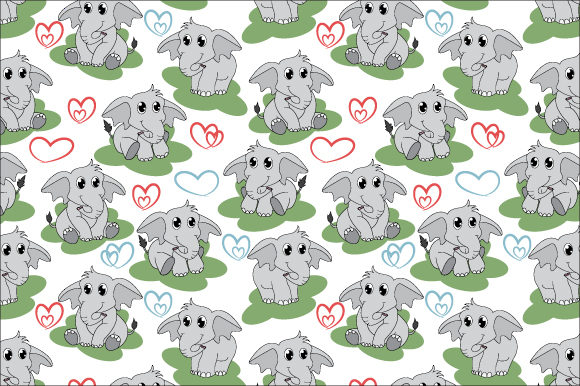
The Adorable Elephant Seamless Pattern is a repeating graphic design asset featuring elephant motifs arranged to tile without visible seams. It is delivered in three vector formats: SVG 1.1, Ai 10, and EPS 10. These formats are widely supported across design software such as Adobe Illustrator, CorelDRAW, Inkscape, and many web development tools. Because it is vector-based, the pattern can be resized infinitely without losing quality, making it suitable for everything from small icons to large-format wall murals.
The pattern itself is pre-constructed, meaning the repeating tile is already aligned and tested for seamless tiling. This eliminates the need to manually position elements or adjust spacing. For designers who need a cohesive background, fabric print, or digital texture, this pattern provides a foundation that can be used as-is or customized further.
Reasons Someone Might Be Interested
Interest in the Adorable Elephant Seamless Pattern typically stems from a need for a playful yet professional design element. Children’s products, nursery decor, baby shower invitations, and educational materials are common use cases where an elephant motif fits naturally. Beyond that, the pattern may appeal to surface pattern designers, scrapbook creators, or small business owners who want a consistent brand element without commissioning custom artwork.
The vector format availability also attracts users who value workflow efficiency. SVG, AI, and EPS files can be opened, edited, and exported across different programs, reducing the risk of software incompatibility. For those who work across teams or platforms, this flexibility is a practical advantage.
Benefits of Using a Pre-Made Seamless Pattern
One of the primary benefits is time savings. Creating a seamless pattern from scratch requires careful alignment, testing, and adjustment. With a pre-made pattern, that work is already done. You can drop the file into your project and focus on other aspects of the design.
Another benefit is reliability. The pattern has been tested to tile correctly, so you avoid common issues like gaps, misalignment, or uneven spacing. This is especially important for large-area coverage, such as wrapping paper, wallpaper, or fabric rolls, where even small errors become visible at scale.
Consistency is also a factor. Because the pattern is vector-based and scalable, it maintains the same visual density and proportion across different sizes. This uniformity is harder to achieve with raster images, which can pixelate or require multiple resolution versions.
Tradeoffs and Considerations
While the Adorable Elephant Seamless Pattern offers convenience, it also comes with limitations. Because it is a pre-designed asset, you are working within a fixed aesthetic. The style, color palette, and composition are predetermined. If your project requires a specific color scheme, mood, or thematic adjustment, you may need to edit the vector files, which requires some familiarity with vector editing software.
Another tradeoff is uniqueness. Since the pattern is available for purchase or download by others, it is not exclusive. If your brand identity relies on completely original visuals, a pre-made pattern may not be the best fit. However, many designers use such patterns as a starting point, modifying colors or adding elements to create a more customized result.
File format compatibility is generally strong, but not universal. SVG 1.1 is well-supported in web browsers and modern design tools, but older software may have partial support. Ai 10 and EPS 10 are legacy formats, which means they open in many programs but may not retain all editing capabilities if your software uses a newer file specification. It is advisable to test the files in your specific software environment before building a project around them.
Situations Where the Pattern Is a Strong Fit
This pattern works well in projects where the design goal is friendly, approachable, and playful without being overly specific. For example:
- Children’s products: Bedding, clothing, room decor, or toys often benefit from gentle, recognizable animal motifs.
- Party supplies: Invitations, banners, cupcake toppers, and gift wrap for baby showers or birthday parties.
- Digital backgrounds: Website headers, social media templates, or video call backdrops that need a lighthearted tone.
- Educational materials: Worksheets, flashcards, or classroom decorations where a consistent pattern adds visual interest without distracting from content.
- Small-scale merchandise: Stickers, phone cases, tote bags, or mugs where seamless tiling ensures a professional finish.
In these contexts, the pattern saves time and provides a polished result that would be difficult to achieve quickly from scratch.
When Alternatives Might Be Worth Considering
There are situations where a different approach may serve you better. If your project demands strict brand compliance with unique colors, specific proportions, or proprietary imagery, a pre-made pattern may require too much reworking. In that case, commissioning a custom pattern or building one from scratch using your own vector elements gives you full control.
If your output medium requires a very large file size or extremely high detail at close viewing distances, a raster-based pattern with high resolution might be preferable. Vector patterns are resolution-independent, but they rely on the complexity of the vector paths. Very simple vector patterns can sometimes feel too clean or flat for certain tactile applications like textile printing, where slight irregularity adds richness.
For projects that require animation or interactivity, an SVG pattern can be used in web development, but you will need to work with CSS or JavaScript to animate the tiling. If animation is a core need, you may want to evaluate whether the pattern structure supports the effects you have in mind.
Finally, if budget is very tight, free seamless pattern resources are available online. However, they may come with restrictive licenses, lower quality, or no support. The Adorable Elephant Seamless Pattern offers a licensed, professionally tested file set, which can be worth the investment if you need reliable output for commercial use.
Practical Decision-Making Insights
Before purchasing or downloading this pattern, consider the following steps to ensure it aligns with your goals:
- Clarify the use case. Will the pattern be used digitally, in print, or both? Vector patterns work well for both, but print production may require additional color mode conversion (CMYK vs. RGB).
- Test compatibility. If possible, open the SVG, AI, or EPS file in your primary design software before committing to the asset. Check that layers, colors, and scaling behave as expected.
- Evaluate customization needs. If you plan to change colors or rearrange elements, ensure your software can edit the vector paths. EPS 10 files may open as a single grouped object in some programs, limiting editing flexibility.
- Consider the audience. Does the pattern’s style match the expectations of your end users? A playful elephant pattern may not suit a corporate or minimalist brand.
- Plan for scaling. Since the pattern is seamless, test it at your intended output size to confirm the density of the repeating tile looks proportionate.
By thinking through these factors, you can avoid workflow bottlenecks and ensure the pattern adds value rather than extra work.
Determining Whether the Pattern Aligns with Your Needs
The Adorable Elephant Seamless Pattern is a practical tool for anyone who needs a friendly, ready-to-use repeating motif in a vector format. Its strength lies in its convenience and broad compatibility. For projects that require playful visuals, rapid deployment, and consistent tiling, it is a strong choice.
If your priorities are originality, strict brand control, or ultra-specific thematic direction, you may need to invest in custom creation or heavily customize the existing files. The decision ultimately hinges on how much creative flexibility you need versus how much time and effort you want to save.
For designers who understand the tradeoffs and are comfortable working within the pattern’s style, this asset can streamline production and deliver a professional result. For those who need total control over every visual element, a custom route remains the better path. By evaluating your project requirements honestly, you can make an informed choice that balances efficiency, quality, and creative freedom.